KGC-Bérlés
Equipment discovery, parts identification, customer management and in-store interfaces. Connected modules for a complex sales and rental operation.
// Welcome to our digital studio.
Websites, customer portals and connected business applications. We design the workflow with you, then build the system around it — with research, engineering and carefully reviewed AI assistance.

Equipment discovery, parts identification, customer management and in-store interfaces. Connected modules for a complex sales and rental operation.

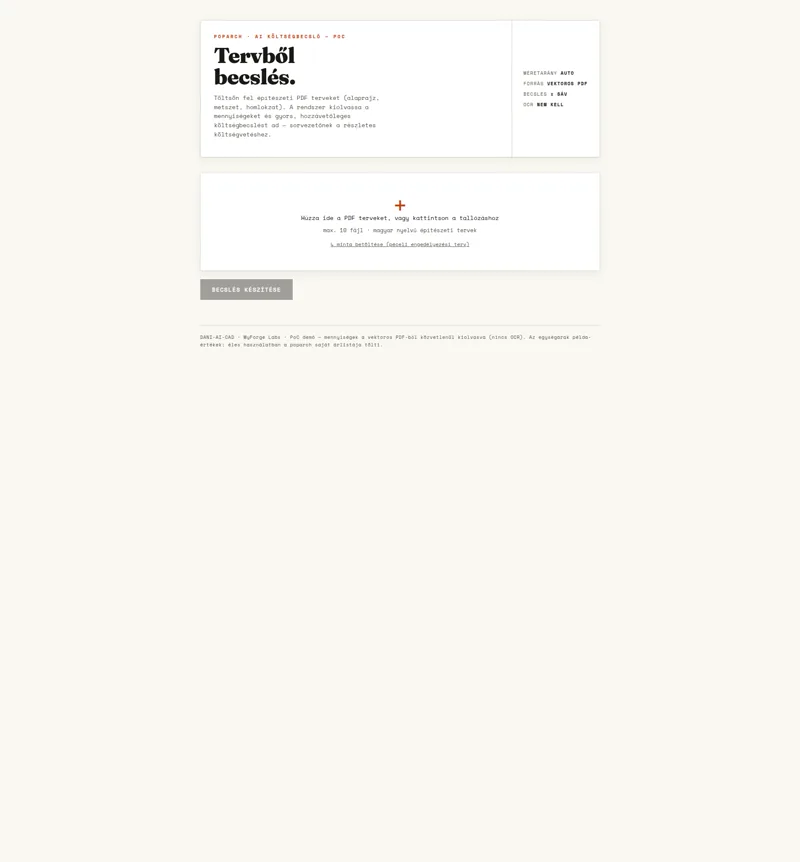
An architectural plan-processing prototype: supported vector PDFs become editable quantities, cost estimates and professional exports.

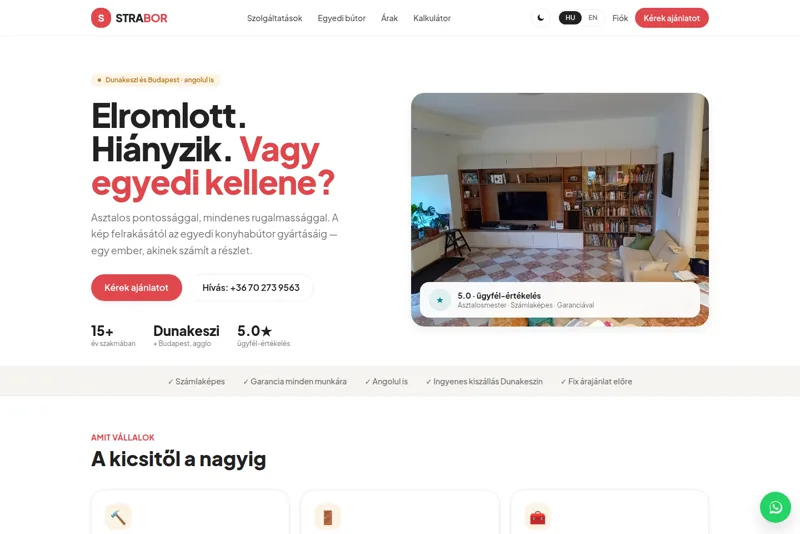
A customer application for a tradesperson’s daily work: estimates, appointment requests, photos, messaging and service administration.

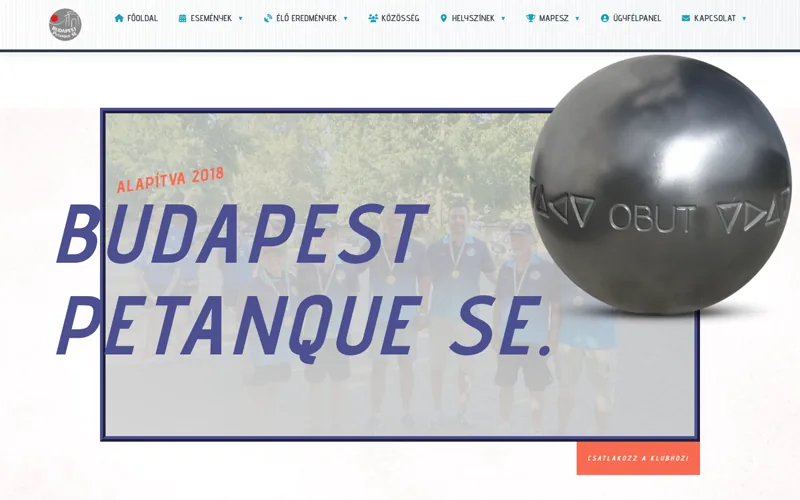
Digital tools for the pétanque community: tournament organisation, team score entry, spectator standings and shared sports information.

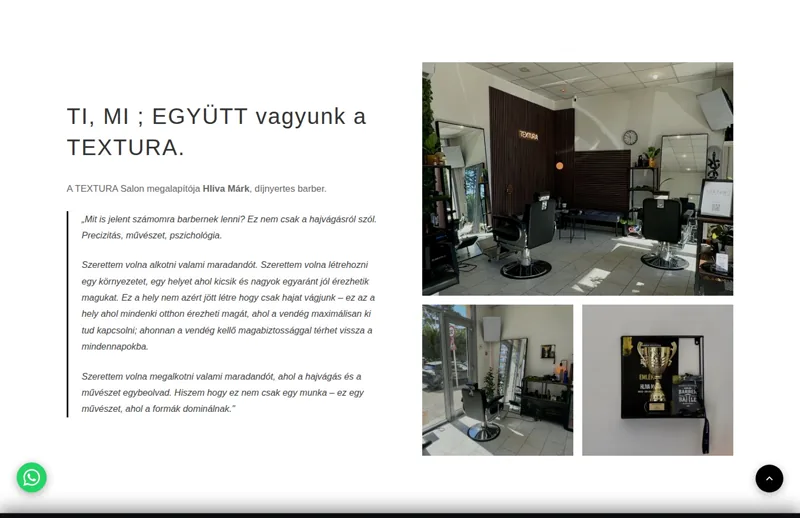
A custom bilingual salon website connecting its real space, stylists and services to a direct booking journey.

Developing an established clinic website: editable WordPress pages, two treatment areas and a coherent Hungarian–English patient journey.

A workplace wellbeing platform that grew out of the instruments of a doctoral research project: research questionnaires, management reports and the Balance module, which rewards healthy habits.

Automated processing of incoming supplier quotes, designed around a machine-parts distributor’s workflow: items extracted from e-mails, PDFs and spreadsheets feed a comparison matrix, with the original source behind every number.

A shared space for parents living apart: expenses, handovers, children’s requests and documents in one place, with two-sided approval.
We have been developing an ERP that connects equipment rental, service, inventory and sales. Its purpose is to keep the history of an asset, partner or work order available at the next business step. A closer look at the development is coming soon.
Explore the system in development ↗Research and development, not just delivery. Technical R&D is among our registered activities: a university research collaboration, plus document-processing and quote-analysis prototypes.
R&D at the studio ↗People build the systems. We understand the problem with you, then choose the technology to match.
Meet the team ↗projects / kgc Client project
Turn equipment discovery into a connected customer journey — in production.
The complete system behind kisgepcentrum.hu: web shop, equipment rental, service intake, parts search and customer accounts — one platform shared with the in-store kiosk and staff workspaces.

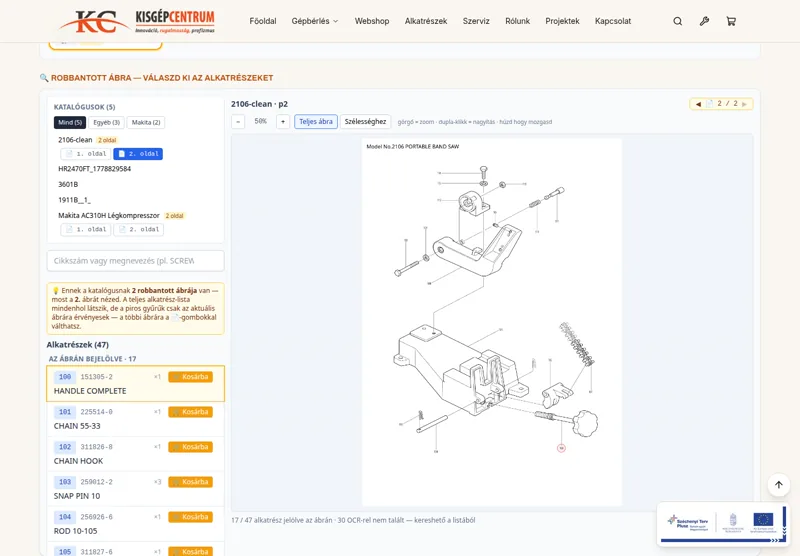
Selecting a part in an exploded diagram builds an enquiry with its part number and quantity. Parts search is available in the desktop interface.
Rental, shop, service and parts requests feed into shared case management. Customers see their own history while internal discussions remain with staff.
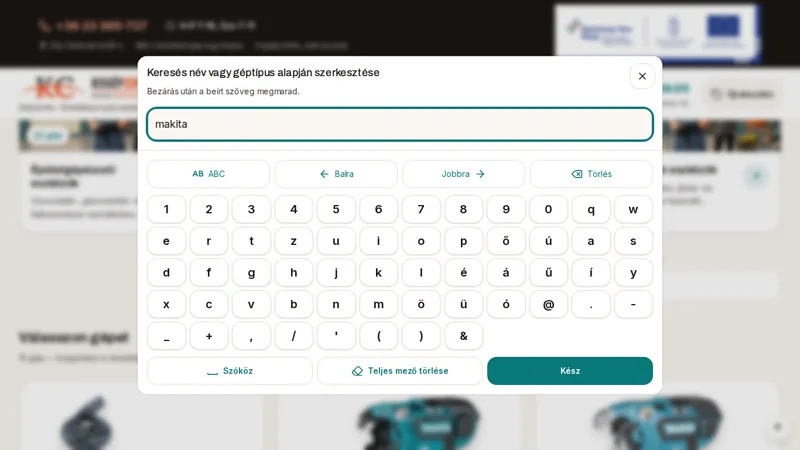
The touch-screen kiosk offers the same equipment, detail pages, date selection and request flow, with its own virtual keyboard.
Build programmes from images, video and text slides. Separate publication, per-screen playlists and weekly schedules support content management.
The portal’s customer code and QR equivalent help staff find an account at the counter. Access to historical cases is granted separately for each case.
Customers can request extensions, changes or cancellation in the portal. Staff decisions and explanations appear in the customer’s conversation; the related business operation is handled separately.
Customers report a fault in two steps, with per-manufacturer diagrams showing where to find the model number. Repair status and quotes for higher-cost work can be followed and approved in the customer account, while the workshop handles intake through procurement in the same case.
Sign-in uses a short-lived link sent by e-mail. Rentals, service cases and orders appear in one place, where customers can also message staff.
A retiring rental machine can be sold as a used item from the product manager, and parts diagrams can be linked to rental machines, shop products and service sheets.
A single machine can be linked to a rental request, accessories, spare parts and a service case. The challenge was to preserve that context when a customer moves from the website to the store, or another team member takes over the conversation.
We started with customer journeys: what visitors need to do, which information is required and who makes the next decision. Connected catalogues support a customer portal and role-specific staff workspaces. Parts diagrams lead to itemised enquiries, while the portal separates customer conversations from internal coordination. An in-store kiosk and a display programme editor support the physical customer experience.
The shared Next.js and React application provides distinct views for customers, the counter, service staff and display management. Node.js endpoints use Prisma models and a PostgreSQL database. An interface to the separate parts engine connects diagrams to itemised enquiries; development of the larger ERP remains a separate workstream.
The platform has been running in production at kisgepcentrum.hu since September 2026, and development continues. Online rental requests require staff confirmation. Full ERP synchronisation, online card payments and automatic invoicing are separate workstreams; acceptance testing on the physical shop kiosk remains outstanding.


projects / poparch Innovation prototype
From drawing data to an estimate you can review.
An architectural plan-processing prototype: supported vector PDFs become editable quantities, cost estimates and professional exports.

Text and spatial layout in vector plans are used to assemble rooms, areas and related line items.
Quantities and costs can be adjusted in the interface. Totals and the estimate range are recalculated alongside those changes.
Export the estimate as a PDF or a spreadsheet grouped by work category for further professional processing.
Manual plan processing separates quantity take-off from price assignment. Automation needed to support that work while preserving the origin of the data, its uncertainty and the specialist’s ability to correct it.
The processor applies drawing-specific rules to text and its position in a vector PDF. It handles rooms, structural layer information and supported door and window schedules separately. The interface keeps source and confidence indicators alongside each item; changing a quantity or unit price recalculates the summary. Exports are produced from that corrected state.
The Next.js interface forwards plans to a Python/FastAPI processor. PyMuPDF provides readable text and its position to rules adapted to each supported plan type; extracted quantities become an editable estimate. PDF and Excel exports are generated from that same corrected result.
A working prototype tested in a private demonstration. It supports selected vector plan formats and does not replace professional review. Cross-plan discrepancy detection and automatic separation of extension work remain planned additions.

projects / strabor Client project
From the first enquiry to an agreed job.
A customer application for a tradesperson’s daily work: estimates, appointment requests, photos, messaging and service administration.

Appointment requests can include a description and photo; subsequent messages remain attached to the same booking.
The provider can block time slots, confirm bookings, update calculator prices and manage the photo gallery.
An installable interface is complemented by web push alerts for new enquiries or messages on subscribed administrator devices.
Requests arriving by phone and messages need to form a complete picture: the work required, its photos, the requested date and what has been agreed. At the same time, the service provider needs direct control over pricing and availability.
The bilingual website connects an itemised estimator, customer accounts and an appointment-request workflow. Availability is checked before the provider confirms the request; details are agreed in the booking’s own conversation. Appointments, prices and portfolio photographs can be managed in administration. The installable interface is supported by push notifications on compatible, subscribed staff devices.
The public site, account area and admin share one Next.js application. Better Auth handles sign-in, while Prisma and SQLite hold persistent data. Each booking has its own conversation; a new request or message can notify subscribed administrator devices through web push.
The Strabor public website and customer application are available. Appointment requests become final after the provider confirms them. Push notifications require a subscription on a supported device.
projects / bpse Club project
Played on the court. Connected through the system.
Digital tools for the pétanque community: tournament organisation, team score entry, spectator standings and shared sports information.

Organisers manage the event, teams submit their own results and spectators follow the relevant public standings.
QR score sheets and team codes provide direct entry points for on-site score submission.
The same source drives map and list views; filtering and route links help visitors choose a venue.
The event list is also available as a subscribable ICS feed, while server-side caching handles temporary upstream failures.
On tournament day, organisers need a full overview, teams need quick score entry and spectators need readable standings. The same competition required different interfaces and permissions, including practical use on phones at the courts.
We built tournament management as a separate application beside the editable club website. Team codes and QR score sheets lead to the appropriate score-entry view. Sports information on the club site uses shared sources: venues feed both map and list views, while the event calendar combines spreadsheet sources.
The club website runs on WordPress and Divi; the tournament system is a separate PHP/MySQL application with JavaScript interfaces. Court maps use Leaflet and OpenStreetMap. A cached server-side calendar proxy reads external sources and also provides a subscribable calendar feed.
The club website and tournament application are public; the portfolio screenshot shows the club site. Calendar and ranking views rely on their identified external sports data sources, while court information connects to community venue descriptions.
projects / textura Client project
The salon experience starts on the first screen.
A custom bilingual salon website connecting its real space, stylists and services to a direct booking journey.

Team profiles connect directly to booking with the stylist the visitor has just discovered.
The fixed booking bar remains accessible while visitors browse the longer introduction and gallery sections.
Hungarian and English content present the salon, services and team within the same visual structure.
The website needed to express the character of the space while keeping services, prices, stylists and booking easy to find on a phone. Hungarian and English-speaking visitors needed the same complete experience.
We aligned black-and-white imagery and typography with real salon photographs. Services, prices and team profiles are easy to reach, and a dedicated mobile booking bar supports the next step. Team members have individual Fresha links, while Hungarian and English pages follow a parallel content structure.
The site uses custom HTML, CSS and JavaScript with separate Hungarian and English content. Introduction, services and team profiles share a single visual system. Bookings take place in Fresha; the website directs visitors to the appropriate booking entry point.
The featured website is publicly accessible. Appointments are handled separately by Fresha.
projects / foxxi Client project
Two specialties. One considered digital presence.
Developing an established clinic website: editable WordPress pages, two treatment areas and a coherent Hungarian–English patient journey.

Existing content became editable Elementor pages and templates while preserving established URLs.
Dentistry and orthodontics have their own entry points and matching service navigation.
Service pages, the blog and entry points to the external booking service follow an aligned Hungarian–English structure.
A custom WordPress extension supports measurement integration for booking events and treatment areas.
The update needed to preserve existing URLs and content, make future editing easier and clarify the route to the right treatment and booking entry point.
We moved the inherited site to editable Elementor interfaces while retaining its existing URLs. Dentistry and orthodontics received distinct visual entry points, followed by alignment of Hungarian and English navigation, images and booking journeys. Custom extensions handle specific needs around headers, image positioning, language switching and booking events.
The WordPress site uses Elementor Pro templates and custom PHP/JavaScript extensions, with WPML managing language relationships. Dentistry and orthodontics have distinct entry points while editorial and measurement components remain within the shared site. The route to the external booking service follows the visitor’s language.
This case covers the public clinic website and its implemented web features. It does not include a patient-record management system.
projects / kinda Research collaboration
From research to an everyday wellbeing platform.
A workplace wellbeing platform that grew out of the instruments of a doctoral research project: research questionnaires, management reports and the Balance module, which rewards healthy habits.

The same platform supports doctoral research data collection and day-to-day company wellbeing programmes.
Rewards appear to employees in forints, while accounting receives a monthly export with category labels.
Programme cost and activity can be followed in one place, team by team.
A research questionnaire is completed once, whereas a company wellbeing tool has to be meaningful week after week for employees and managers alike. The challenge was to connect the two without compromising the research methodology.
We rewrote the legacy PHP system as web and mobile applications on a shared codebase. The questionnaires remain, while the Balance module offers weekly activities in four dimensions — health, community, finances and private life — approved by a manager and redeemable for rewards.
A shared codebase: a Next.js web application and an Expo-based mobile application with shared interface elements, schemas and types. Prisma models and a MySQL database hold the data; legacy questionnaire data and the new question set live in the same schema.
The Balance MVP has been live since May 2026. Step counts are currently entered manually; health-data synchronisation is prepared but not live. Packaging and pricing are under discussion.
projects / ajanlat-radar In-house R&D
The original behind every number.
Automated processing of incoming supplier quotes, designed around a machine-parts distributor’s workflow: items extracted from e-mails, PDFs and spreadsheets feed a comparison matrix, with the original source behind every number.

Beside each extracted price sits the highlighted PDF region, spreadsheet cell or e-mail line — verification is one click.
Gross prices are converted to net and currencies at a dated rate, in one matrix that marks what is missing.
The same workflow runs with a rule-based or a language-model extractor, so accuracy and cost can be compared by measurement.
A quote may arrive in the body of an e-mail, as a PDF or as a spreadsheet, with gross or net prices, in another currency and without a delivery time. Manual comparison is slow, and it is hard to trace where a number came from.
The prototype links incoming e-mails to a project, extracts line items and builds a comparison matrix. Every value carries its source: a highlighted PDF region, a spreadsheet cell or a line of the e-mail. The system recommends rather than decides, and collects missing information in a gap list.
A Python processing pipeline with a FastAPI web interface. PyMuPDF reads PDF text and positions, openpyxl reads spreadsheet cells; the extraction layer can be swapped between rule-based and language-model implementations. The output is a state file from which the matrix and gap list are built.
A research prototype using synthetic data only: the e-mails, suppliers and prices are invented. It is not a production client system and no commission followed.
projects / kozos Own product
Order in shared matters, across two households.
A shared space for parents living apart: expenses, handovers, children’s requests and documents in one place, with two-sided approval.

A shared item is valid because the other party accepted it — so the record belongs to both parents.
A child account can make requests and see what concerns the child, while parental costs and private topics never reach it, even server-side.
One container, one database file, daily verified backups — with no dependence on external services.
Child-related expenses, handovers and requests scattered across messages are hard to follow and easily lead to misunderstanding. Meanwhile, children should not see their parents’ finances.
Every shared matter is two-sided: an expense proposal is approved by the other parent, a handover is confirmed by the receiving parent, and a child’s request is accepted by both. A child account sees only what concerns the child.
A TypeScript application running in a single container: a Node.js server and an SQLite database on a separate data volume behind the web interface. Changes are saved in transactions with data-version checks and a change log; sessions and forms are protected by origin and CSRF checks.
An in-house product used privately. There is no open registration, bank transfer, e-mail or SMS sending; the site is deliberately hidden from search engines.
// Technology follows the task.
Websites designed around your brand, clear on mobile, with useful content and straightforward enquiries.
Explore ↗Customer portals, bookings, inventory and in-store kiosks. Connected interfaces for your daily operations.
Explore ↗Knowledge bases, document processing and support for repetitive workflows. Tools selected for the task.
Explore ↗Take the 2-minute check →// human-led. ai-assisted.
Practical business knowledge meets systems engineering. AI tools support our work; we take responsibility for the decisions and the finished solution.
Nearly 30 years spent where software is actually used, not written. At MyForge Labs he looks after the business side and leads AI-integration projects.
26 years of building and running enterprise systems, in environments where an upgrade must not disrupt the business. At MyForge Labs he owns architecture and AI-assisted development.
// Every good project starts with a conversation.
Tell us what you want to make simpler, better-looking or more effective.
extensions / claude
Anthropic
We plan with Claude and the BMAD method: research becomes requirements, architecture and reviewable tasks.
Project briefs, user journeys, architecture, task breakdown and acceptance criteria.
This is a look at our way of working. We choose tools for the task; professional decisions and verification are our responsibility.
extensions / codex
OpenAI
In our workflow, Codex primarily handles review: checking changes against the brief and looking for defects and missing validation.
Actionable findings, edge cases, test coverage questions and verification of fixes.
This is a look at our way of working. We choose tools for the task; professional decisions and verification are our responsibility.
extensions / gemini
We use Gemini for deep research, web discovery and mapping a subject. NotebookLM helps connect the selected sources.
Investigating market and technical questions, possible approaches and sources to verify.
This is a look at our way of working. We choose tools for the task; professional decisions and verification are our responsibility.
extensions / bmad
Munkamódszer / Method
An AI-assisted development method. We use it with Claude to structure research-informed planning, decisions and task breakdown.
A brief, specification, architecture and verifiable handover sized to the task. The broader method also supports implementation and review.
This is a look at our way of working. We choose tools for the task; professional decisions and verification are our responsibility.
extensions / vscode
Microsoft
Files, editors and terminals in one workspace. This way of working inspired the website.
Project navigation, separate editors and tasks viewed side by side.
This is a look at our way of working. We choose tools for the task; professional decisions and verification are our responsibility.
extensions / playwright
Microsoft
We check clicks, mobile layouts and form behavior in a real browser.
Testing navigation, keyboard access and important user journeys.
This is a look at our way of working. We choose tools for the task; professional decisions and verification are our responsibility.
extensions / git
Verziókezelés / Version control
We keep development changes in versions so they can be compared and reviewed.
Separate development branches, reviewable differences and releases.
This is a look at our way of working. We choose tools for the task; professional decisions and verification are our responsibility.
extensions / notebooklm
We organise selected sources into a shared research space, summarising, comparing and retrieving knowledge for planning.
Exploring connections between documents, research and projects alongside Gemini.
This is a look at our way of working. We choose tools for the task; professional decisions and verification are our responsibility.
extensions / obsidian
MyForge tudásrendszer / knowledge system
Our Superintelligent Vault connects sources, projects, decisions and lessons into retrievable knowledge.
A Markdown knowledge base, relationship graph, crystallisation and approved knowledge propagation.
This is a look at our way of working. We choose tools for the task; professional decisions and verification are our responsibility.
extensions / skills
Újrahasznosítható tudás / reusable knowledge
Skills provide repeatable procedures, tools and verification criteria for recurring tasks.
Research, planning, code review, browser testing, SEO, document work and knowledge retention.
This is a look at our way of working. We choose tools for the task; professional decisions and verification are our responsibility.
extensions / discord
Kommunikáció / Communication
Client questions, handoffs between bots and developer feedback connect. Follow this message path in the demonstration.
Client–bot communication, specialised bot collaboration and human decision points.
This is a look at our way of working. We choose tools for the task; professional decisions and verification are our responsibility.
Planning with BMAD
Start the workflow and follow the changing tasks in the terminal and sessions.
Code review and verification
Start the workflow and follow the changing tasks in the terminal and sessions.
Deep research and discovery
Start the workflow and follow the changing tasks in the terminal and sessions.
projects / atlas.workspace
Look behind the interfaces. Explore the solutions, inspect real screenshots and put two projects side by side.
9 projects
Choose up to two to compare.Client project
The complete system behind kisgepcentrum.hu: web shop, equipment rental, service intake, parts search and customer accounts — one platform shared with the in-store kiosk and staff workspaces.
Live business platform · kisgepcentrum.hu
Innovation prototype
An architectural plan-processing prototype: supported vector PDFs become editable quantities, cost estimates and professional exports.
Working prototype · private demo
Client project
A customer application for a tradesperson’s daily work: estimates, appointment requests, photos, messaging and service administration.
Public website and customer application
Club project
Digital tools for the pétanque community: tournament organisation, team score entry, spectator standings and shared sports information.
Public application
Client project
A custom bilingual salon website connecting its real space, stylists and services to a direct booking journey.
Public website
Client project
Developing an established clinic website: editable WordPress pages, two treatment areas and a coherent Hungarian–English patient journey.
Public website
Research collaboration
A workplace wellbeing platform that grew out of the instruments of a doctoral research project: research questionnaires, management reports and the Balance module, which rewards healthy habits.
Live platform · research collaboration with the University of Pécs Faculty of Health Sciences
In-house R&D
Automated processing of incoming supplier quotes, designed around a machine-parts distributor’s workflow: items extracted from e-mails, PDFs and spreadsheets feed a comparison matrix, with the original source behind every number.
Research prototype · synthetic data
Own product
A shared space for parents living apart: expenses, handovers, children’s requests and documents in one place, with two-sided approval.
Live · private, invitation-only family use
Try a different capability or clear the filters.
compare / projects
Compare the demonstrated capabilities and current status. Each project was built for a different purpose.
Select two projects from the cards above.
We understand the business problem, design the system and build it in steps you can inspect. Step inside the studio: choose a project and explore how research, human decisions and AI-assisted development connect.
Sources, open questions and an SSP brief.
Clarifying the goal and constraints together helps decide what belongs in the first usable version.
Before the next stageWe agree which problem to solve and how we will know it has been solved.
Research and sources
KGC-Bérlés
A single machine can be linked to a rental request, accessories, spare parts and a service case. The challenge was to preserve that context when a customer moves from the website to the store, or another team member takes over the conversation.
Planning and work breakdown
KGC-Bérlés
Customer-facing and internal web application development: catalogues, request submission, customer records, case-based communication, and counter and service views. The scope also includes the parts-engine interface, kiosk interaction, and editing, publishing and scheduling display programmes. In September 2026 the system gained the web shop, the full service workflow and customer accounts, and went into production.
Review and tests
KGC-Bérlés
Does the desktop parts diagram lead to the right part number and itemised enquiry?
The complete system behind kisgepcentrum.hu: web shop, equipment rental, service intake, parts search and customer accounts — one platform shared with the in-store kiosk and staff workspaces.
A single machine can be linked to a rental request, accessories, spare parts and a service case. The challenge was to preserve that context when a customer moves from the website to the store, or another team member takes over the conversation.
Customer-facing and internal web application development: catalogues, request submission, customer records, case-based communication, and counter and service views. The scope also includes the parts-engine interface, kiosk interaction, and editing, publishing and scheduling display programmes. In September 2026 the system gained the web shop, the full service workflow and customer accounts, and went into production. The platform has been running in production at kisgepcentrum.hu since September 2026, and development continues. Online rental requests require staff confirmation. Full ERP synchronisation, online card payments and automatic invoicing are separate workstreams; acceptance testing on the physical shop kiosk remains outstanding.
Suggested acceptance question · verification pending
Does the desktop parts diagram lead to the right part number and itemised enquiry?
The goal, context and acceptance criteria in one place.
# KGC-Bérlés / brief.md
> ILLUSTRATIVE SAMPLE · Based on public portfolio information. Not a client brief or approved project plan.
## Research · Gemini + NotebookLM
Reviewing the sources leads to a checkable brief. This example uses the portfolio and does not start live research.
## SSP / Goal
The complete system behind kisgepcentrum.hu: web shop, equipment rental, service intake, parts search and customer accounts — one platform shared with the in-store kiosk and staff workspaces.
## SSP / Context
A single machine can be linked to a rental request, accessories, spare parts and a service case. The challenge was to preserve that context when a customer moves from the website to the store, or another team member takes over the conversation.
## SSP / Constraints
Customer-facing and internal web application development: catalogues, request submission, customer records, case-based communication, and counter and service views. The scope also includes the parts-engine interface, kiosk interaction, and editing, publishing and scheduling display programmes. In September 2026 the system gained the web shop, the full service workflow and customer accounts, and went into production.
The platform has been running in production at kisgepcentrum.hu since September 2026, and development continues. Online rental requests require staff confirmation. Full ERP synchronisation, online card payments and automatic invoicing are separate workstreams; acceptance testing on the physical shop kiosk remains outstanding.
## SSP / Checkable outcome
Suggested acceptance question; verification pending:
- [ ] Does the desktop parts diagram lead to the right part number and itemised enquiry?
## Next handover · BMAD + Claude
- [ ] Separate sources, facts and open assumptions
- [ ] Review the SSP goal, constraints and acceptance criteria together
- [ ] Approve the implementation direction and verification approach
## Learning loop
Research may also start from previously approved lessons. A new finding needs a source, crystallization and an approved destination before propagation.
## Status and limits stated in the portfolio
The platform has been running in production at kisgepcentrum.hu since September 2026, and development continues. Online rental requests require staff confirmation. Full ERP synchronisation, online card payments and automatic invoicing are separate workstreams; acceptance testing on the physical shop kiosk remains outstanding.
Source: https://www.myforgelabs.com/en/case-studies/kgc-rental/Research can also use lessons that have already been reviewed and approved.
Record the actual result, environment and limits.
Select and check the lasting lesson within the raw experience.
How it becomes knowledgeAfter review, to an approved destination: a project document, decision or shared knowledge.
The approval pointBack to research, with better context.
Gemini + NotebookLMknowledge / connected.workspace
MyForge Superintelligence connects project context, specialised AI roles and developer decisions. A valuable lesson from one project becomes retrievable knowledge for the next.
01 / knowledge graph
Select a node for details. Drag to rearrange, or use arrow keys while focused. The list below also works on mobile.
capabilities / reusable methods
02 / discord handoffs
Every handoff has an owner, a purpose and a tangible output. This scripted example illustrates Discord-based collaboration: follow the request through research and development to human approval.
client-request.mdApproval continues only this local example.
MYFORGE / ERP In development · a closer look is coming soon
We have been developing an ERP that connects equipment rental, service, inventory and sales. Its purpose is to keep the history of an asset, partner or work order available at the next business step. A closer look at the development is coming soon.
Staff interfaces suited to each role
React + ViteRental · service · inventory · sales
Node.js + NestJSRelated data and queued background work
PostgreSQL + Prisma · Redis + BullMQShared foundation: roles, organisational separation and traceable operations.
BUSINESS MODULES / 01—05
The equipment journey from pricing through checkout and return to its related contract. Rental operations have their own business module.
Repair tasks, work orders and warranty cases are organised as connected workflows in dedicated service modules.
Modules cover products and stock movements from goods receipt and stocktaking to sales operations.
Partner records, business documents and related communication provide context for the same case.
Roles, audit trails and separated organisational workspaces define who can access each part of the business data.
ENGINEERING / STACK
A modular TypeScript monorepo with a Node.js and NestJS API, React–Vite workspaces, PostgreSQL–Prisma data handling and Redis–BullMQ background jobs. Dedicated access and tenant layers separate data belonging to different organisations.
The ERP in development is a separate project from the KGC-Bérlés web application. Modules and integrations are progressing incrementally; a public demonstration and operational rollout are separate delivery steps.
MYFORGE / WORKSPACE SETTINGS
Arrange this website around the way you like to explore. Changes appear immediately.
These settings apply only to this website. Layout preferences stay on this device; form entries are not saved here.
Workspace shortcuts do not run while you type in a form field.
❯ bmad Research · Gemini + NotebookLM
MyForge Workspace. Type help · Local navigation commands.
// Demonstration events.
Workspace opened. Choose a project or play the BMAD demonstration.
WORKSHOP · LIVE SYSTEM · BUDAPEST
From business idea to working system. Two AI agent fleets work on it around the clock, and two people sign off before anything goes live.
11.11@myforgelabs.comthis is your shared space.